TL;DR: The Quick-Read
- The Core Argument: Being "always-on" doesn't mean you answer your phone at midnight; it means your leadership standards operate 24/7 even when you aren't in the building.
- Who This Is For: Plant managers, ops leaders, and supervisors who feel like their operation starts to rot the moment they drive out the front gate.
- What You Get: A breakdown of why 3:00 PM is your biggest leadership risk, the "Always-On" framework for systemic accountability, and how to stop being a "hall monitor."
- Read Time: 9 minutes.
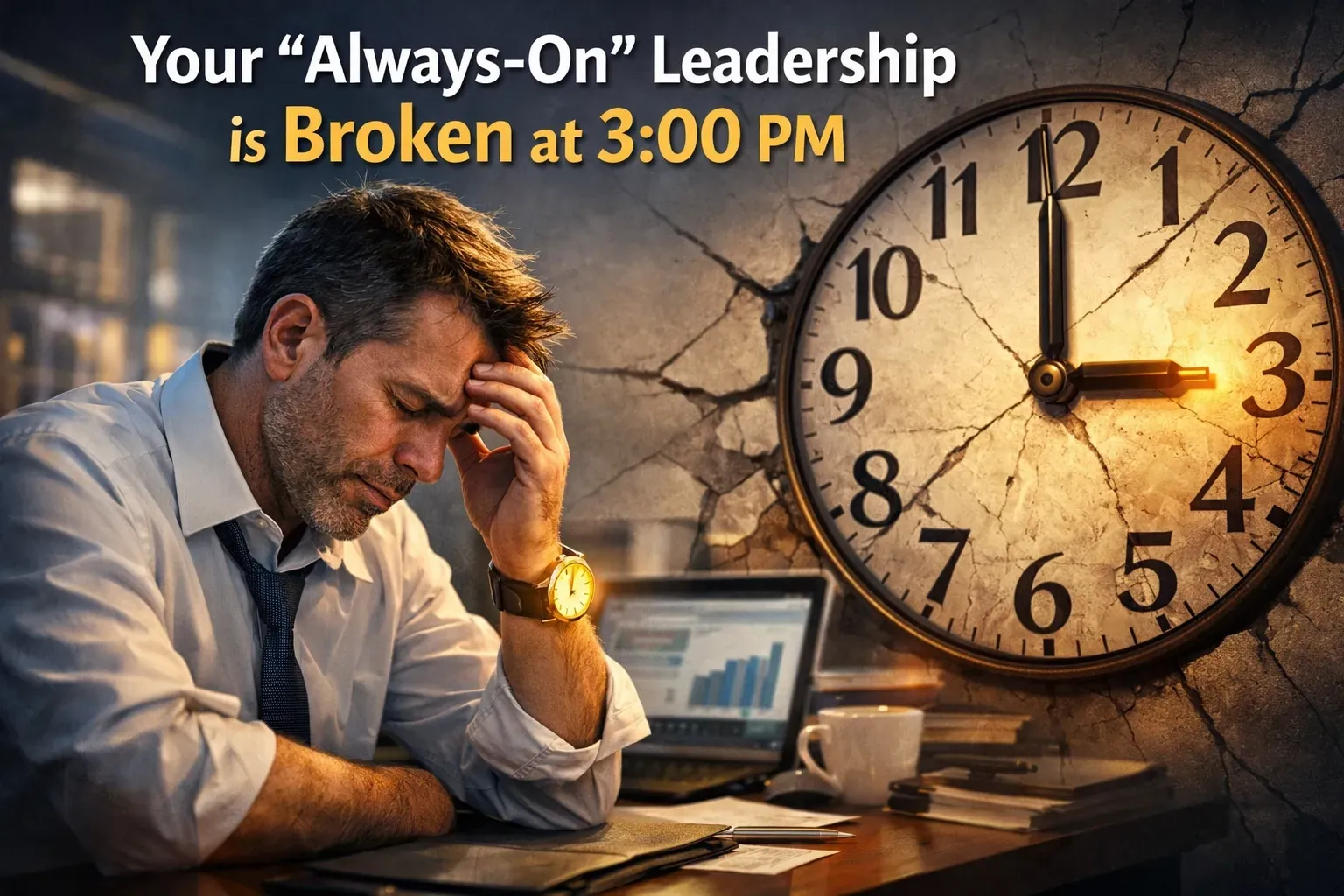
The humidity in the control room is thick enough to chew. It is 3:00 PM. Outside, the air smells like sulfur, hot asphalt, and the sharp metallic tang of a steam leak that nobody has quite found yet. The day shift is mentally already in their trucks, imagining the first cold beer. The evening shift is shuffling in, rubbing sleep out of their eyes, clutching oversized gas station coffee mugs like lifelines.
A radio squawks. A high-level alarm on the B-train separator begins its rhythmic, annoying chirp. The day supervisor ignores it; he’s handing over a messy logbook to a guy who hasn't had enough caffeine to care. In this 30-minute window, the standards you spent all day enforcing evaporate. This is the moment your leadership fails. Not because you aren't working hard, but because your leadership is tied to your physical presence.
I have spent twenty years inside refineries and chemical plants watching this exact scene play out. Most consultants call this a "communication breakdown." They are wrong. It is a system failure. You have built a leadership model that requires an industrial hall monitor—an
Enforcer or
Auditor—to function. When they leave, the kids start throwing rocks.
The Trap of Availability vs. The Reality of Presence
What You Are Getting Wrong (And Why It Persists)
We tend to view leadership as a personality trait or a set of behaviors performed during "business hours." In a 24/7 operation, business hours are a myth. If your safety standards or operational discipline dip when the sun goes down, you don't have a culture. You have a performance.
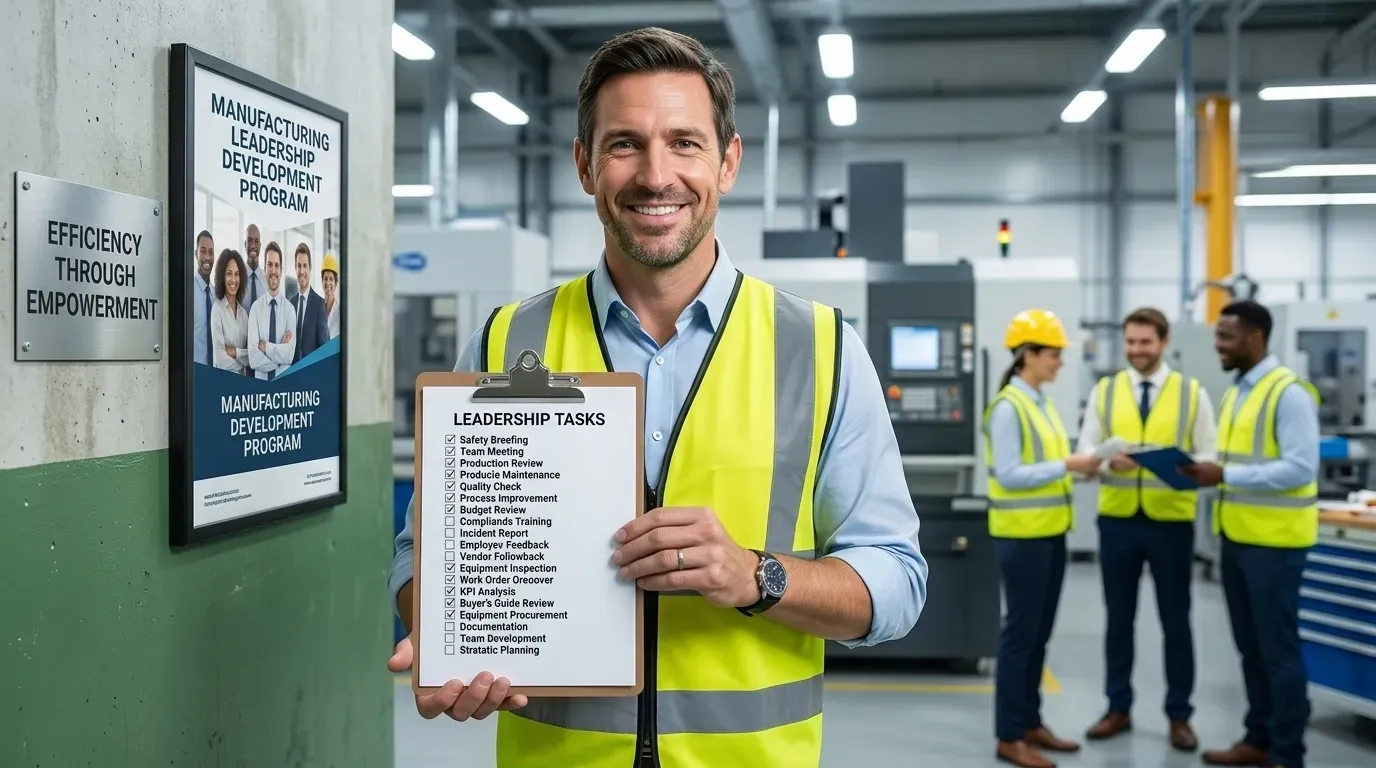
Leaders get this wrong because they focus on compliance. They use clipboards, checklists, and "spot checks." They act like industrial hall monitors—industrial
Enforcers and
Auditors—who can catch a missing signature but still miss the bigger picture. This creates a workforce of "Cruisers": people who do exactly enough to not get fired while the boss is looking, then coast the second the tail-lights disappear.
The problem persists because it feels like work. Walking the floor at 10:00 AM feels productive. Sending emails at 4:00 PM feels like "closing out the day." But if you haven't set the standard for what happens at 3:00 AM, you are just playing at leadership.
The "Always-On" Framework
True Always-On Leadership is a 24/7 standard, not a positional or time-limited activity. It’s the invisible hand that guides a board operator’s decision when a pressure gauge spikes and the supervisor is in the bathroom. It’s built on three pillars:
- Systemic Presence: Your expectations must be baked into the process, not just your spoken words. If a procedure is "too hard" to follow on night shift, the procedure is the problem, not the operator.
- The Handover as a Sacred Rite: 3:00 PM is the most dangerous time in your plant. Always-On leaders treat the shift change as the primary point of failure. It isn't a "chat." It is a formal transfer of accountability.
- The Decision-Making Guardrails: You empower your people by giving them the "why" behind the "what." If they understand the operational intent, they don't need to call you at 2:00 AM. They already know what you would say.
Most companies think their problem is technology or equipment age. It usually isn't. It’s the fact that their leadership "turns off" when the administrative building locks up for the evening.
Where Do You Sit on the Ownership Index?
To fix this, you have to stop looking at "engagement" and start looking at "ownership." At Xsite Creative, we use a tool called the
Ownership Index. It’s a six-stage diagnostic that measures whether your people are just complying with your rules or actually owning the outcome.
It works in
Three Phases:
- Phase 1: Imposed (Stages 1–2: Resistance, Requirement)
- Phase 2: Managed (Stages 3–4: Routine, Recognition)
- Phase 3: Embedded (Stages 5–6: Resolve, Reflex)
Most industrial environments are stuck in the
Imposed phase—specifically
Stage 2: Requirement. This is where the leader plays industrial hall monitor: the
Enforcer/Auditor archetype. They make sure people
do things right (compliance), but they don’t empower people to
do the right things (ownership). Safety lives and dies by
TRIR/LTI scores. You can feel it on the floor: people do what the checklist says because the checklist says it. They keep their head down. They don’t challenge bad handovers. They don’t surface weak signals. They aim for “no recordables,” not “no surprises.”
Now, some plants grind their way into
Phase 2: Managed, and they’ll brag about it because they have routines. They even promote
Stage 4 Coaches who genuinely want to help. But Coaches still fail when you pretend
Work as Written matches
Work as Done. If your procedures look beautiful in a binder but collapse at 3:00 PM when the unit is hot, shorthanded, and a pump is cavitating, your coaching turns into nagging. The system stays brittle, and ownership never sticks.
The goal is
Phase 3: Embedded—where people reach
Stage 6: Reflex and the leader becomes an
Architect. That’s the shift you actually want: authority lives where the knowledge lives. The board operator doesn’t need permission to stop and reset a messy handover. The mechanic doesn’t “wait for a supervisor” to flag a repeated near-miss. People act because it’s the right move for the mission, not because the Auditor might show up.
If you want to know where you sit, look at your "near-miss" reports. If 90% of them come from the day shift, your night shift isn't "safer." They are just quieter. They have decided it isn't worth the hassle to report things when the "leadership" isn't around to hear it.
The Human Cost of the 3:00 PM Gap
The Data Doesn't Lie
For those who need the hard numbers: In a 2024 review of industrial safety incidents across North American manufacturing, nearly
68% of significant process safety events occurred between the hours of 6:00 PM and 6:00 AM.
Despite this, less than
15% of leadership development budget is spent on off-shift supervisors.
We are training the people who work when the sun is up, and leaving the people who manage the most risk in the dark. That is not an oversight. It is a design flaw. You cannot claim to be a high-reliability organization if your leadership standards have a bedtime.
Resetting the Standard
If this sounds like your plant, it’s time for a
RESET. Not a "rah-rah" motivational speech, but a structural reset of how leadership functions at the edges of the day.
You don't need a new "mission statement." You need to change what happens at 3:00 PM. You need to stop being the industrial hall monitor (Auditor) and start being the
Architect who ensures the standard survives the sunset.
The real issue isn't that your people don't care. It's that they are waiting for a leadership system that stays awake as long as they do.
What does your night shift supervisor do when something feels "off" but nothing is technically wrong yet?
The problem isn't that you aren't reachable; it's that your leadership isn't repeatable.
How many of your night shift supervisors have you actually had a real conversation with in the last month? Not a check-in. A real one.