Why Leadership Training Doesn't Stick : and Why It's Not the Content
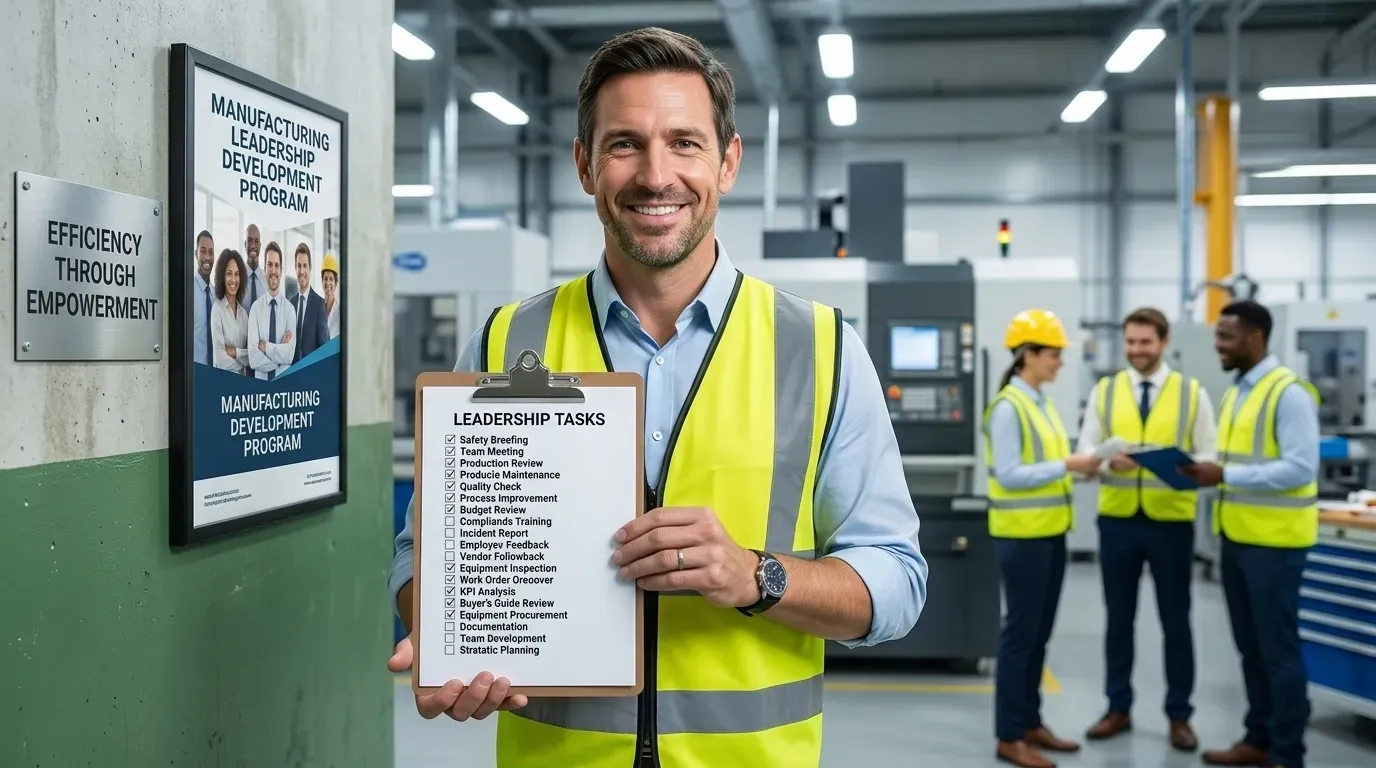
TL;DR: Leadership training usually fails because the format is often chosen for convenience instead of fit. This article is a buyer’s guide to where each leadership training format works best, where it tends to fall short, and how to choose the right option based on the problem you’re trying to solve. To make frontline leadership training stick, you have to match the delivery to the objective and back it with the RESET framework. Read time: 8 minutes.
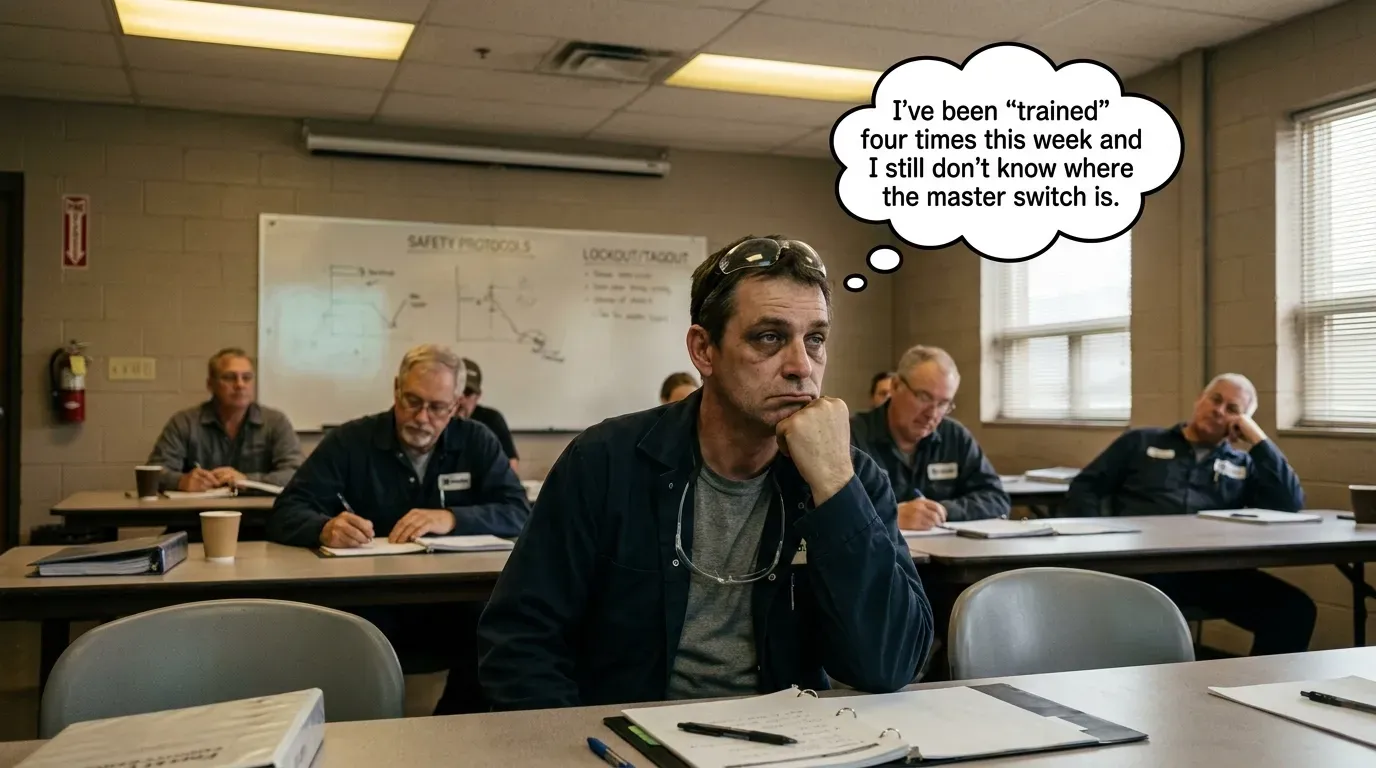
You’ve seen it before. Mike, a twenty-year floor veteran who was promoted to supervisor because he was the best mechanic on shift, is sitting in a windowless breakroom. He’s staring at a PowerPoint slide about "Emotional Intelligence" while his radio crackles with news of a pump seal failure on Unit 4.
Mike isn’t learning. He’s waiting. He’s waiting for the consultant to stop talking so he can go back to the world where things make sense: where steel and torque matter more than "active listening."
The industry is littered with the remains of these programs. Most leadership development for plant managers fails not because the content is bad, but because the format is a mismatch for the reality of the plant floor. If this is going to work, the format has to fit the objective, the environment, and the level of behavior change you actually need.
Diagnose Before You Prescribe
Most training decisions are made by looking at a budget and a calendar. "We have $20k left and Tuesday is open. Let’s do a workshop."
This is how you waste money.
To actually move the needle on behavior-based change management, you have to diagnose the gap first.
- The Knowledge Gap: They don’t know what to do. (Solution: Modular or Virtual)
- The Skill Gap: They don’t know how to do it under pressure. (Solution: On-site Instructor-led)
- The Cultural/Systemic Gap: They know what to do, but the environment won’t let them. (Solution: Offsite Retreat or Sustained Engagement)
If you prescribe a knowledge-based fix for a systemic problem, you should not expect much to change.

Instructor-Led On-Site: Where It Works Best
This is the "Bootcamp" model. It’s 2 to 5 days of intensive work.
Where it works best: On-site instructor-led training is strong when the goal is skill development in a real operating context. It works well for new supervisors, frontline leaders who need practice handling conflict or accountability conversations, and teams that need examples grounded in their day-to-day environment. This is also where real operational change management can take shape because you can see the conditions people are working in, not just what they say in a conference room.
What to watch for: Even when people are in the room, they may not be fully present. They are checking phones for unit trips, stepping out to handle staffing issues, or mentally staying attached to the shift. The building keeps pulling them back into the current way of operating. If you do not have a plan for re-entry, where the learning survives the first 48 hours back on the floor, the investment can fade quickly.

The Retreat-Style Offsite: Where Separation Helps
Taking the team to a remote location is the most expensive format on the menu. But geography is a powerful psychological tool.
Where it works best: Geographic removal creates room for focus. When they are 200 miles away, they cannot jump in to fix the compressor. That distance helps people shift from technician mode into leader mode. Offsites are especially useful when the objective is team alignment, leadership identity, trust building, or resetting how a group works together. They also send a clear signal that development matters.
What to watch for: The biggest risk is treating the offsite like the whole solution. If there is no follow-through back at the plant, the experience becomes memorable but temporary. This format works best when it is part of a broader sequence, not a standalone event.
The Monthly Modular: Where Consistency Wins
This is the "drip-feed" model. One to four hours a month, usually led by internal HR or a training coordinator.
Where it works best: The low barrier to entry is the advantage. It does not blow up the shift schedule, and it works well for building a shared vocabulary over time. This format is useful when the goal is reinforcement, manager discussion, steady capability-building, or helping leaders absorb concepts like AI adoption or "The Ownership Index" in manageable pieces.
What to watch for: Because it is easier to move, it is also easier to deprioritize. If each session gets pushed for production demands, the program loses momentum. Without manager reinforcement between sessions, monthly modular training can turn into content delivery without behavior change.

Since 2020, virtual has become the default. It is cheap, scalable, and useful in the right situations.
Where it works best: Access is the advantage. If you have ten sites across three time zones, virtual may be the only practical way to get everyone on the same page. It is effective for delivering frameworks, pre-work, refreshers, short topic-based sessions, and preparing a team for an upcoming in-person workshop.
What to watch for: Virtual becomes less effective as the work gets more personal, more candid, or more practice-based. Fatigue sets in quickly, especially for leaders working in active operating environments. Email is one click away, and the phone is always in reach. Virtual can support leadership development, but it is usually not the strongest format for deep behavior change by itself.
The Winning Architecture: The RESET Framework
The strongest programs don't pick one format; they sequence them. They treat leadership as a daily practice, not a one-time event. At Isomerics, we use the RESET framework to ensure that whatever format you choose actually sticks:
- Recognize: Identify the specific broken behavior, not just the "symptom."
- Establish: Set the new mental model. This is where the training happens.
- Swap: Actively replace the old behavior with a new one in the field.
- Embed: Repeat until the new way is the easier way.
- Track: Measure the operational outcome, not just the attendance.

The "Make or Break" Factor
You can hire the best consultants in the world, use the best offsite, and build strong virtual modules. It will not matter if senior leadership does not reinforce it.
If a supervisor tries a new coaching technique they learned in a workshop and their boss shuts them down with "just get the barrels out the door," the training will stall. The organization’s daily rhythms have to support the behavior, or the old habits will win.
If you want leadership training to stick, you have to support it in the environment people work in every day.
Are your leaders walking out with a practical habit loop they can use, or just another binder for the shelf?
Stop running programs that don't stick. Let’s talk about building a leadership architecture that actually works for your plant.
If you want more in-depth guidance on this topic, download our free guide: making the case for leadership training or give us a call!