
ABOUT US
Our Mission
Get More Human.
Change has always been hard. But in an age where organizations are moving faster, automating more, and leaning on technology to solve problems that are fundamentally about people — it's harder than ever.
Our mission is to help leaders and organizations get more human. That means aligning technology, systems, and leadership with how people actually work. It means fostering the sincere connections that drive real performance, and developing leaders who create cultures of trust rather than cultures of compliance.
Because the organizations that will win in the next decade aren't the ones that replaced the most people with technology. They're the ones that developed their people while everyone else was distracted by it.
Our Vision
A future where organizations achieve different outcomes not by adding more — but by structuring what they already have to work better. Where technology accelerates human potential instead of replacing it, and change is designed for how people actually work — not forced on them. Where connection is the strategy, and people are the priority.
Our Names Epic Origin Story
In chemistry, isomers are molecules with the same molecular formula but different arrangements of their atoms. Same components. Different structure. Sometimes dramatically different properties.
We thought that sounded a lot like organizations.
Two companies can have similar people, equipment, technology, processes, and resources—and perform very differently. The difference isn't always what they have. Sometimes it's how those pieces are structured, connected, and working together.
That's the thinking behind Isomerics.
We look at the organization as a system. Sometimes improving performance means adding something new. But sometimes the pieces are already there—they just need to work together differently.
Same pieces. Different arrangement. Different outcomes.
Why us
Our Value and Expertise
Less Hype. More Substance.
Most consulting engagements produce a great deck and a shelf full of recommendations nobody implements. That's not what we do.
At Isomerics, we do the hard, human work — the kind that shows up on the floor, in the shift handoff, and in whether your people own the outcome or just execute the order. We don't dazzle you with frameworks. We build systems that work because they're designed for how your people actually work.
That means diagnosing before prescribing. Telling you what's actually happening, not what's comfortable to hear. And staying until the behavior changes — not just until the workshop ends.
We bring industrial credibility, certified change management methodology, and just enough irreverence to ask the questions everyone else is avoiding.
Industrial, Manufacturing, and Healthcare Specialization
We don’t just consult for these sectors — we speak their language, understand their pressures, and know where legacy systems stall progress. From the control room to the boardroom, we cut through the buzzwords and zero in on what actually drives results: clarity, strategy, and operational realities. Our value isn’t in selling change — it’s in making change work where it counts.
Shattering Conventional Boundaries
We don’t just tweak the system — we question why it exists. At Isomerics, we trade best practices for bold practices, helping organizations unlearn what’s no longer serving them. In a world addicted to outdated processes and the status quo, we build custom strategies for businesses ready to think independently, act decisively, and lead with purpose.
Leader-Leader
We don't build better followers. We build leaders at every level — people who own the outcome, not just the task. Authority lives where the knowledge lives. Accountability runs in every direction. That's not a training program. It's a cultural shift.
Technology Integration
We don’t chase trends — we study them to understand where you’ve been, where you are, and where you’re going. With that insight, we integrate technology like AI, automation, and interactive tools to eliminate friction, surface what matters, and amplify what already works. The goal isn’t shiny objects — it’s systems that are responsive, resilient, and relevant to real-world needs.
Partnership NOT Transaction
We prefer a handshake to a handoff. That means staying until something actually changes, building capability so the organization doesn't regress when we leave, and showing up as a long-term partner — not a one-time vendor. The engagement ends. The relationship doesn't.
Innovative Experiential Tactics
People don't change because they sat through a presentation. They change because they experienced something that made the old way impossible to go back to. We design every engagement — diagnostic, workshop, leadership session — to create that moment.
Look at the five shapes below and decide
Which one doesn't belong?
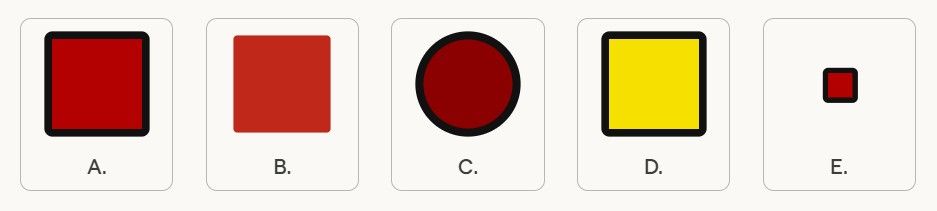
There is no single correct answer. There's only the frame you're using to look.
That's how we walk into every operation. Same problem — different frames, different root causes, different solutions.
Most consultants arrive with the answer before they understand the question.
We start by making sure we're looking at the right thing.
How We work
Our Process
One process, sized to the problem.
Every engagement starts with a free working session. From there, your work takes one of two forms.
Training builds a specific skill, like a frontline leadership series, a Train-the-Trainer program, or troubleshooting training built around your equipment. We prepare your leaders before the session and follow up after, so the skills show up on the job.
Consulting takes on bigger problems: fixing how the work gets done, leading a reorg or acquisition, rolling out new technology, or turning around a culture that keeps pulling people back to the old way. The work changes with the problem, and change management comes with it every time.
Both follow the same five steps. For training, they might happen over a few conversations. For consulting, they unfold over weeks or months.
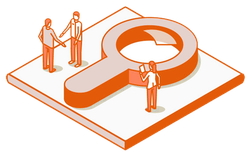
1. Diagnose (We learn how your operation really runs)
Training • Conversations with you and your team, plus a review of your current training. We learn what the training needs to accomplish, pinpoint the skill gap, and see what the work really demands.
Consulting • A gap analysis between how the work is supposed to run and how it really runs. Interviews, observations across shifts, and a structured evaluation across process, systems, capability, and culture come together in a findings report.
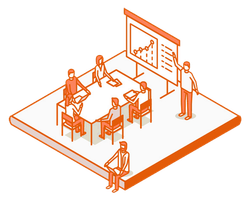
2. Decide (We agree on where you're going and how you'll measure it.)
Training • We agree on who attends, what they should be able to do afterward, and how you'll know it worked.
Consulting • We walk your leadership team through the findings and weigh the options together. You get a roadmap that ranks what to fix first by impact and effort, names who owns each piece, and sets the measures and baseline we'll track.
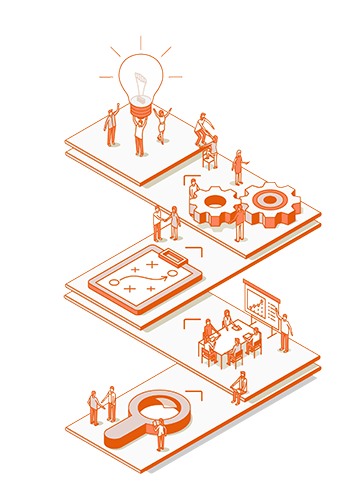
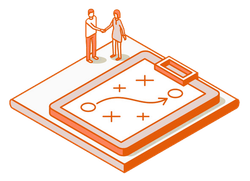
3. Align (We build buy-in and ownership before anything launches.)
Training • The leaders of the people attending get a short briefing on what the training covers, why it matters, and how to reinforce it on the job. Participants know why they're there before they walk in.
Consulting • We map who the change affects and how, check readiness across the organization, and build the communication and reinforcement plan. Leaders at every level learn their role in carrying the change, and the people closest to the work help shape it before it launches.
4. Build (We build the skills and systems.)
Training • We tailor a workshop from our library or build a custom one around your equipment, procedures, and real problems. Practice scenarios, job aids, and materials all come from your real work.
Consulting •
We design the solution with your team, including new processes, system fixes, leader development plans, and training. When it makes sense, we set up a pilot so the change can be tested before a full rollout.
5. Execute (IWe put it to work, test it, and hand it to your team.)
Training • We deliver on-site, around your shifts. Sessions are experiential, interactive, and look like the real work. Each one includes hands-on practice, deep discussions, and a few high-pressure moments people remember. Follow-up with participants and their leaders keeps the new skills in use.
Consulting • We roll out the change with your team, on the floor and across shifts. We coach your leaders in the moment, track progress against the measures we set, and adjust when something isn't working. As the new way takes hold, ownership moves to your people and our role shifts to advisor. A follow-up review confirms the change held.
How we show up
Try this right now!
Stand up.
- Turn your upper body to the right as far as you comfortably can. Note where you end up.
- Come back to the center.
- Now turn again. Where did you end up this time?
Most people will go further the second time, but did anything change? There was no new training. No new equipment. No new policy. The only thing that really changed was a willingness to stretch a little past where you were comfortable.
The point is you can't mandate a behavior change.
You can send emails, make posters, write new policies, and even discipline when they're not followed. And you'll get compliance — but only until the spotlight moves.
Or you can change the environment so the new behavior is easier than the old one. Lower the friction. Remove the obstacles. Make the right way the obvious way. And build a culture where stretching past comfortable isn't the exception — it's the expectation.
That's how we show up.
A Message From the Founder
Hey there!
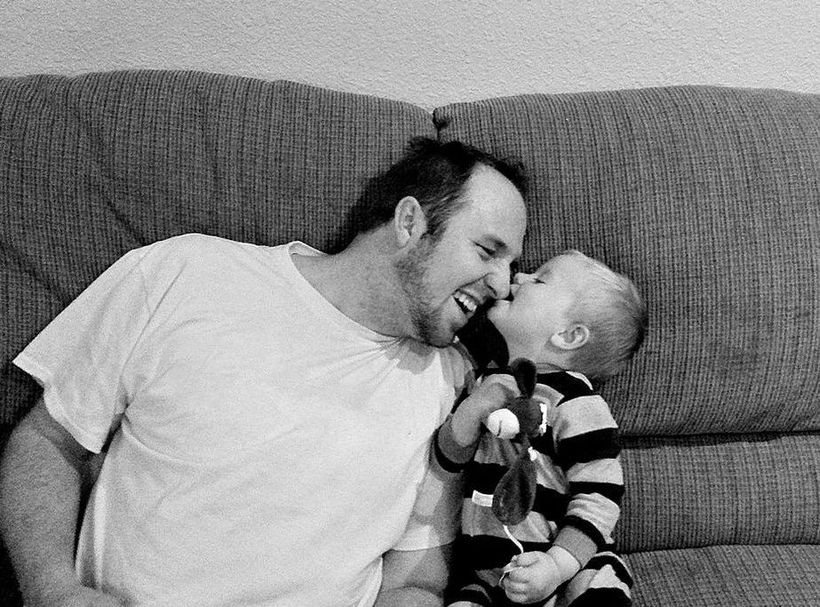
There's a photo on my desk of a much younger version of me. It's a little grainy and slightly out of focus — but it's one of my favorites.
When my youngest son was just a toddler, he leaned in to give me a kiss and, at the last second, decided the better move was to bite my nose. I couldn't stop laughing.
That moment reminds me every day that leadership — like parenting — is messy, human, and unpredictable. You can’t script it. You can only show up, stay calm, laugh when things don’t go as planned, and then adapt.
I've spent 20 years inside industrial operations learning that same lesson on a much larger scale.
Plants don't fail because people don't know the rules. They struggle because leading is hard, change is harder, and nobody ever taught the best operator on the floor how to lead the people standing next to him. That's why Isomerics exists. Not to hand you a report and disappear. But to do the very difficult but very human work of building organizations where leadership actually shows up on the floor — not just in the mission statement.
There’s a quote by U. S. Navy Rear Admiral - Grace Murray Hopper that says, “You manage things; you lead people.” I'd like to take that a step further: “Leadership isn’t about managing outcome`s — it’s about leading others and managing yourself in the moments that matter. Do that right and the outcomes will follow.” If that sounds like a different kind of consulting, that’s because it is.
Welcome to Isomerics.
— Elliot Anderson
President, Isomerics