CONSULTING — DIRECTION & VISION
If you got replaced tomorrow, what would your team do differently?
Direction without alignment is just intention. Alignment without vision is just activity. When every leader owns a piece of the direction — the whole organization moves.
What you find below might be the most important leadership conversation your team hasn't had yet. ↓ ↓ ↓
Align. Transform. Perform.
WHAT IS DIRECTION AND VISION?
One direction. Every level.
Direction & Vision is a structured leadership engagement that combines the DiSC Work of Leaders assessment and team culture mapping to build genuine alignment from the senior leader to the floor.
It starts with the leadership team at the top. Then it cascades — through middle management, through frontline supervisors — until the direction that lives in the war room means something specific and actionable to the supervisor leading a crew of ten people on the night shift.
Every leader leaves with their own vision, their own priorities, and their own plan, but all connected to the same direction.
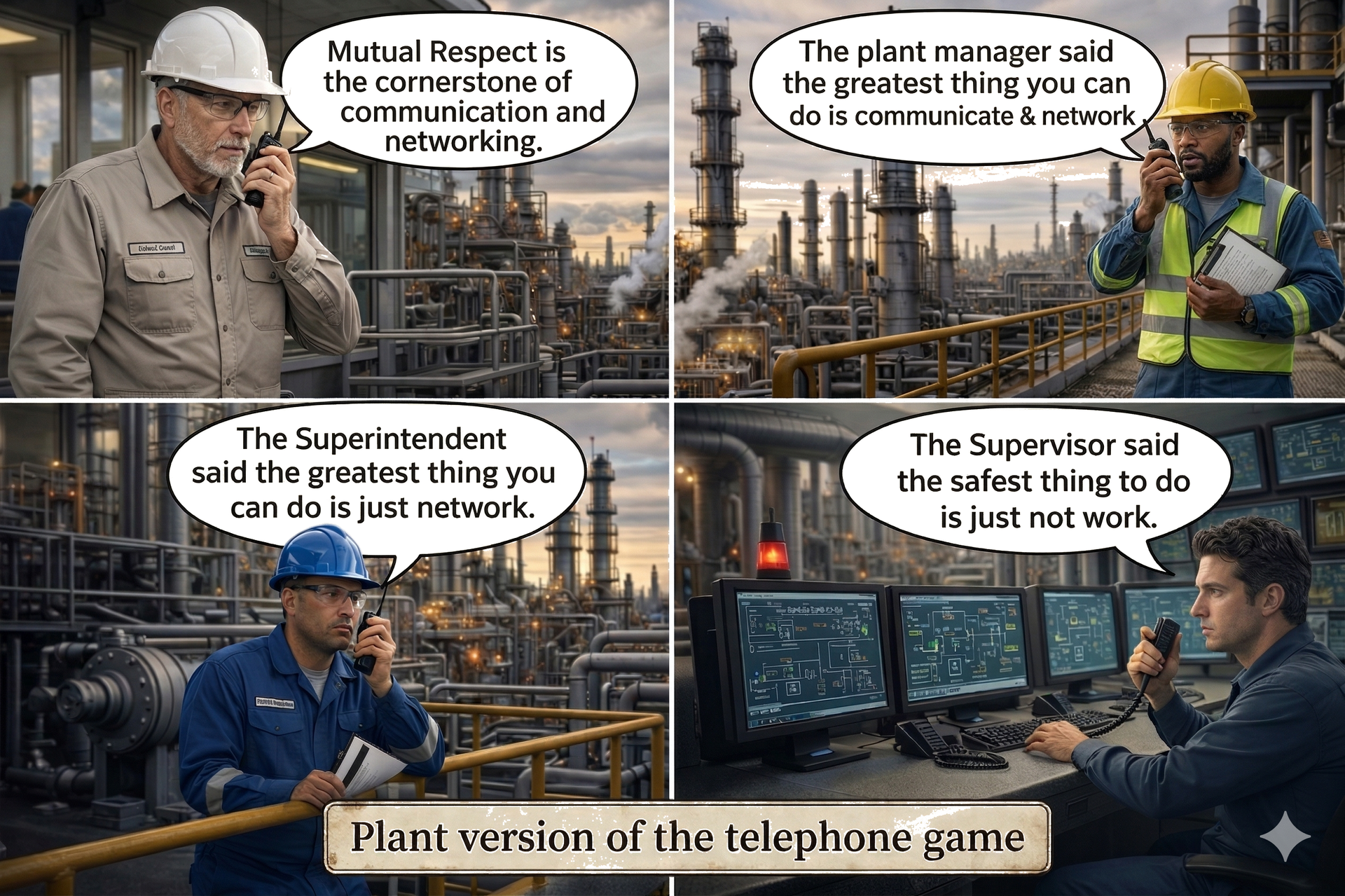
"Not a dozen different visions. One direction — owned at every level."
Everyone knows the vision. Almost nobody owns it.
Most organizations cascade vision the same way — the leader at the top sets the direction and everyone else's job is to support it. It sounds right. And it works fine until you realize that "support" means something different to every person in the room.
The plant manager hears one thing. The shift supervisor hears another. The crew lead on nights hears something else entirely — if they hear it at all.
What seems like a communication problem is really a translation problem. And the fix isn't a better all-hands meeting or a clearer strategy document. It's making sure every leader at every level can translate the main direction into something specific enough that their team knows exactly what it means for them — without drifting from the original intent.
Not a dozen different visions. One direction — owned at every level. That's what this engagement builds.
The Question that Changed Intel
In the mid-1980s Intel was losing ground in their core business. Andy Grove turned to his co-founder Gordon Moore and asked: "If we got kicked out and the board brought in a new CEO — what would he do?"
Moore answered immediately. "The new CEO would get out of memory chips."
Grove said: "Why don't we walk out the door, come back in, and do it ourselves?"
That's how we approach Vision and Direction!
FAQs
The questions we often get asked about vision and direction consulting.
Before You Launch
A new direction is the easy part. Getting your people there is the work.
Setting direction is a leadership decision. Executing it is a human one. The gap between what leadership decided in that offsite and what actually changes on the floor isn't a strategy problem — it's a people problem.
New direction means someone's role looks different. Someone's routine gets disrupted. Someone who was good at the old way now has to prove themselves in the new one. If your initiative doesn't account for that, you're not rolling out a vision — you're creating resistance.
Change management is how you close that gap before it costs you. If you're investing in a new direction, it's worth asking: what's the plan for bringing your people along?
Ready to find out where your leadership team actually stands?
The conversation starts with one question.
If you got replaced tomorrow — what would the new person do differently?
If that question made you uncomfortable, curious, or both — that's worth thirty minutes of your time. No pitch. No proposal. Just a direct conversation about what your results mean for your specific operation.
Not sure where to start? Take the Operational Health Evaluation first.