The Pizza Party Paradox: Why Your Recognition Program is Rewarding the Wrong People
TL;DR:
If your recognition program keeps celebrating the person who makes the biggest save, you may be training your operation to crave drama. This is
The Performative Recognition Trap: leaders reward visible crisis-response, employees learn what gets attention, and the quiet high-performers who prevent problems start disappearing into the wallpaper. This post explains why managers fall for that trap, why the "loud fixer" keeps winning, and how to redesign recognition around the people keeping your operation stable.
Read Time: 7 minutes
Audience: Plant Managers, Operations Directors, Safety Managers, and anyone tired of applauding noise while the best people quietly check out.
Why do so many managers reward drama?
Not effort. Not discipline. Not consistency. Drama.
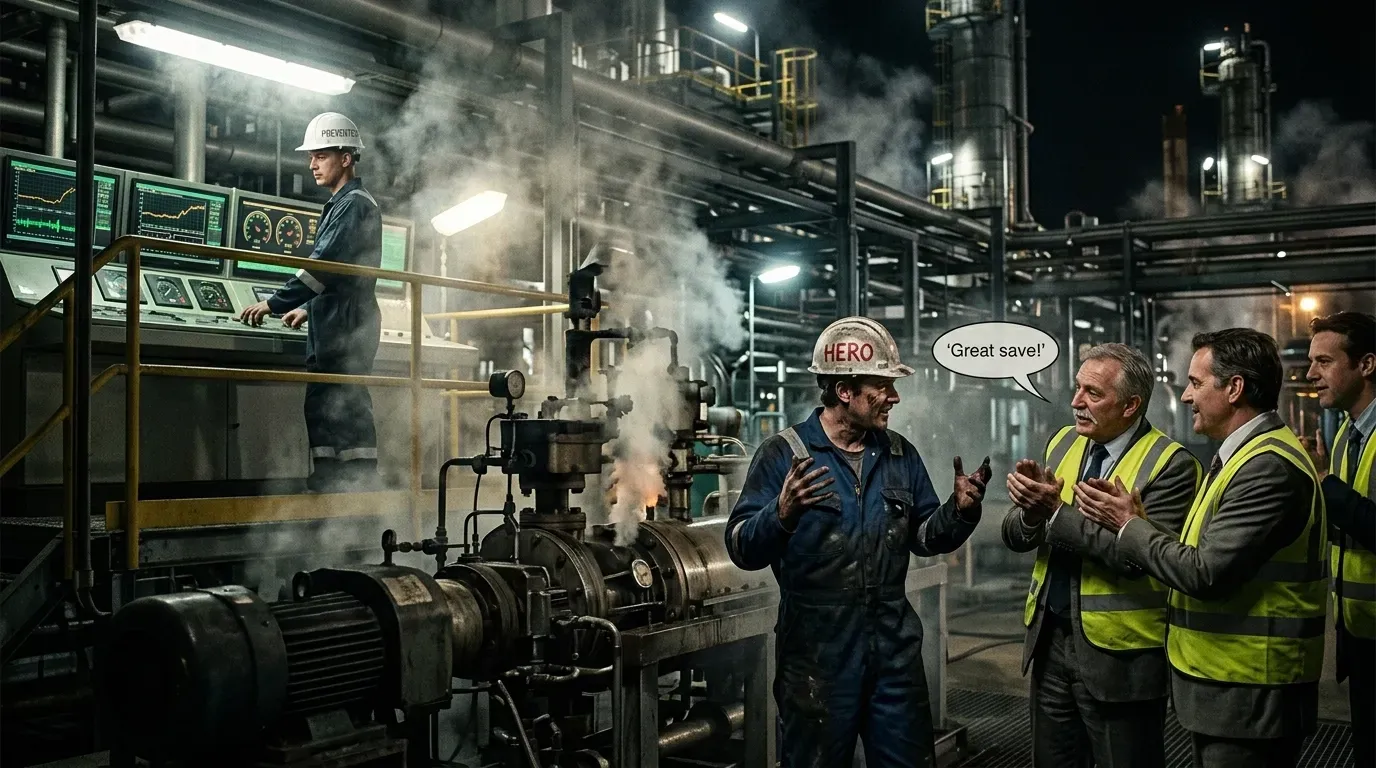
A line goes down, a machine starts screaming, and suddenly the whole floor has a main character. Dave jumps in, gets loud, improvises under pressure, and gets the process limping again just enough to survive the shift. By noon, he has the handshake, the praise, and the pizza.
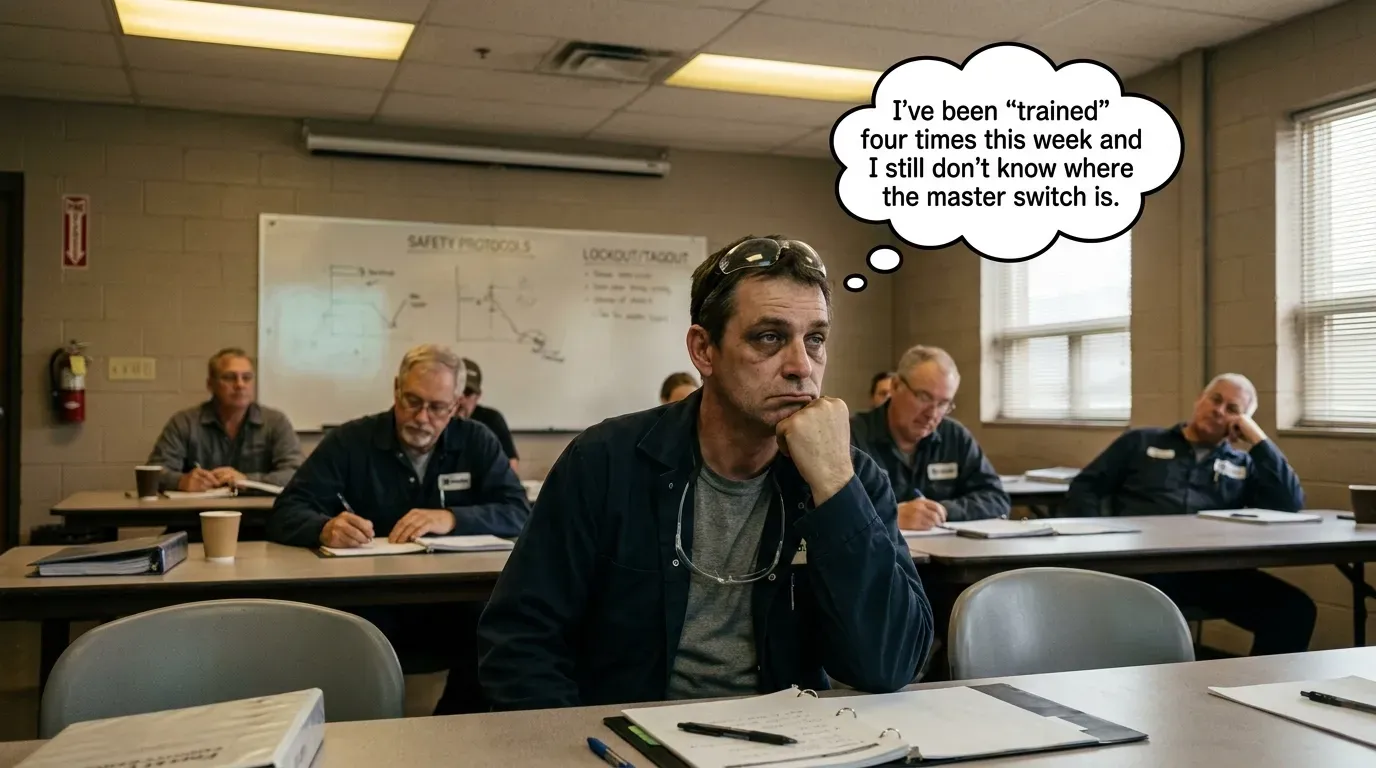
Meanwhile, the technician who flagged the issue two weeks earlier, documented it cleanly, and tried to get it addressed before it turned into a mess? Forgotten.
That is the trap.
You start believing you are rewarding commitment, when what you are really rewarding is visibility. You think you are recognizing contribution, but you are actually teaching the team that calm, disciplined prevention has less value than a public save.
That is how a recognition program turns into a performance problem.

The Performative Recognition Trap
Most recognition programs are sold as morale tools. In practice, a lot of them become stage lighting. They shine on the most visible moment, not the most valuable behavior.
That is The Performative Recognition Trap.
A crisis happens. Someone steps into the center of the scene. Management responds with praise because the effort is obvious, emotional, and public. Everybody sees it. Everybody remembers it. It feels fair because the struggle was visible.
But that reward does more than acknowledge the moment. It teaches the room what kind of behavior gets noticed.
And people respond to that.
The loud fixer starts learning that crisis-response comes with status, attention, and that little hit of satisfaction that comes from being seen as the one who saved the day. Managers feel good because they are rewarded for their commitment quickly and publicly. The team gets a story. The shift gets a hero. Everybody gets a dopamine bump.
What they do not get is a more reliable operation.
Because the next time there is a weak signal, a loose handoff, a sloppy check, or a recurring issue that could be dealt with early, the system is no longer neutral. It has already trained people to understand that quiet prevention is background work, while visible rescue is career currency.
You may not be intentionally rewarding more crises. But behaviorally, that is exactly what you are doing.
The Loud Fixer vs. The Silent Professional
Forget the old heroic archetypes. The pattern is simpler than that.
- The Loud Fixer: visible, reactive, energized by pressure, and hard to ignore when something goes sideways.
- The Silent Professional:
steady, prepared, disciplined, and easy to overlook precisely because they do not create scenes.
The Loud Fixer gets remembered because the moment is dramatic.
The Silent Professional gets forgotten because their best work leaves no crater behind.
That is why managers miss the problem. They think they are rewarding effort. But often they are rewarding theater. The person wrestling the breakdown in public looks indispensable. The person who kept the shift boring looks replaceable.
That message lands hard.
The invisible high-performer starts asking a dangerous question: Why bother doing all the quiet work if the only thing leadership notices is the spectacle?
That is when motivation starts to rot. Not all at once. Slowly. The extra diligence drops off. The early warning gets skipped. The documentation gets thinner. The discretionary effort that keeps operations tight starts to fade.
Not because people stopped caring.
Because your system taught them what counts.
Why Managers Keep Falling for It
Managers do this for understandable reasons.
They are busy.
They are under pressure.
They need to show appreciation fast.
They want the team to know effort matters.
And the person who just wrestled a crisis into submission gives them a perfect public moment to reward.
That moment is clean. It is visible. It tells a story.
The quieter contribution does not.
Nobody gathers around to applaud a clean handoff.
Nobody high-fives the operator who noticed a trend before it crossed a limit.
Nobody throws a pizza party because a supervisor enforced a standard that prevented rework three days later.
So unless a manager deliberately goes looking for those signals, they default to the obvious one.
That is how recognition becomes distorted. Not because leaders are malicious. Because they are reacting to what is easiest to see.
Making change stick requires frontline leadership training that helps supervisors notice disciplined, repeatable behaviors before they get buried under the noise of the next emergency.

The Motivation Problem You Created
The biggest damage here is not just operational. It is psychological.
When someone performs at a high level every day without fanfare, they become easy to take for granted. Their consistency makes them blend into the background. They stop being seen as exceptional because they make excellence look normal.
That is the burden of The Invisible High-Performer.
They are the ones catching weak signals, tightening up communication, following the standard when nobody is looking, and preventing the kind of sloppiness that eventually turns into cost, downtime, or risk. But because their work removes drama instead of creating it, leadership often forgets they are carrying half the place.
Then the loud fixer gets celebrated again.
You do not have to be a psychologist to predict what happens next. The invisible high-performer starts pulling back the extra effort that nobody notices anyway. They still do the job. But the care level drops. The initiative drops. The willingness to stick their neck out early drops.
And once that happens, the operation gets noisier.
That is why this matters for AI adoption, process discipline, and every other improvement effort you want to launch. Advanced systems do not run well on adrenaline and improvisation. They run on stable habits, clean handoffs, and people who still believe that disciplined work matters.
What Recognition Should Actually Reward
If you want a recognition program that strengthens performance instead of distorting it, stop rewarding the most theatrical moment and start rewarding the behaviors that make trouble less likely.
That means paying attention to questions like these:
- Who saw a problem early and said something before it got expensive?
- Who followed the standard when cutting corners would have been easier?
- Who created a cleaner handoff, clearer communication, or less variation between shifts?
- Who made the work safer, steadier, or easier for the next person without demanding applause for it?
These are the behaviors that build team performance. They are not flashy. They do not give you a dramatic breakroom story. But they are what make performance dependable instead of accidental.
And yes, you still acknowledge effort during a tough recovery. You are not pretending emergencies do not require skill. But if the only thing your system knows how to celebrate is emergency skill, then your system is undercutting the people keeping emergencies rare.
The Person You Forgot Because They Never Let You Panic
Picture the operator, technician, or supervisor whose shift always seems calm. Their area stays tight. Their documentation is clean. Their handoffs make sense. Their equipment issues somehow show up early instead of all at once. You rarely hear their name in the middle of a mess.
That is not an absence of contribution. That is contribution at its highest level.
If your managers cannot identify and reward that person with the same seriousness they bring to a public rescue, your recognition program is training the wrong instincts.
Audit What Your Recognition System Is Really Teaching
If your leadership team is tired of applauding the wrong behaviors, it is time to stop guessing and examine what your recognition program is actually reinforcing.
Traditional consulting firms will give you another template, another survey, or another motivational poster. We do not do that. We solve for behavior. At Isomerics, we help leaders run Behavioral Audits on recognition programs so you can see what is truly being rewarded, what is being ignored, and how those signals are shaping the culture on your floor.
If your best people are becoming invisible while the loudest saves keep getting celebrated, that is not a people problem. That is a design problem.
Contact Isomerics today to audit your recognition system and build one that strengthens disciplined performance instead of rewarding drama.