THE MERIT TEST

The Merit Test

You've decided something has to change. This is about the thing you want to change it to.

Use it when
You're holding a proposal — yours or someone else's — and deciding whether to commit to it.
It answers
Is this idea strong enough to commit to, and what is it resting on?
It won't
Tell you when to move. A strong idea launched at the wrong moment still fails.

ONE

The cause

Most change ideas arrive from somewhere else and go looking for a problem to sit on. Start at the other end.

A symptom is the problem showing itself. It's what you notice. Deal with only this and it comes back next month.

A root cause is what produces it. Take this away and the problem stops happening at all.

A pump keeps failing. The failure is the symptom. Worn bearings are the immediate cause. Nobody owning the lubrication route is the root cause.

Not sure whether you've reached a cause?

TWO

Where it came from

Not the evidence for it. The idea itself. This is a question about the proposal, not the proposer.

THREE

What the current way does well

Answer for the need, not the thing. A routine is a good example: the new way destroys the old routine, and a new one will form to meet the same need — but not on day one. That waiting period is its own risk, so it has its own answer below.

The current way is still here because it gives people something. There are two kinds of something, and they get handled differently.

Useful. It does a real job. Your new way has to do that job too, or the change fails.

Slack. Less work. Less blame. Nobody checking. Your change may be built to take that away, and that can be the right call.

Both get missed when they go. That is why each answer below asks which kind it is.

Three questions. Answer each one straight, even when the answer argues against your own idea.

FOUR

What has to be true

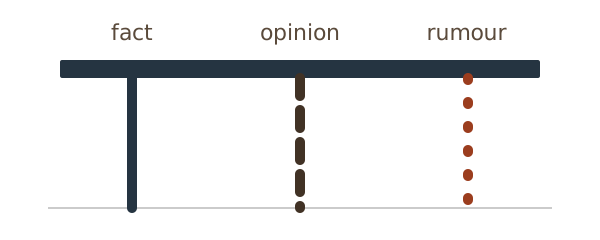
List what this idea depends on. Then mark where each one came from. A fact beats an opinion, an opinion beats a rumour, and the weakest one on your list is what the whole idea is standing on.

Fact — you have seen it, measured it, or can show someone the evidence today.

Opinion — someone with relevant experience believes it. Worth something, still a belief.

Rumour or gut feeling — you heard it and could not say who actually knows, or you simply feel it is true and could not say why.

FIVE

How it holds

An idea that needs people to keep choosing it every day decays on its own. An idea built into the work holds without anyone trying.

SIX

Who ends up worse off

Every change has losers. Named ones can be talked to. Unnamed ones become the resistance you'll blame on culture later.

SEVEN

Test and reverse

These are two different questions, and mixing them is how large irreversible changes get launched on the strength of a small pilot.

A judgment aid, not a scoring model. It organises what you already know so the weak point is visible before you commit.