SECOND CURVE
The Second Curve Test
Every way of working has a life span. The moment to start the next one arrives while the current one still looks fine. This tells you whether that moment is now.
- Use it when
- You're weighing whether to change something that still works, or you've noticed signals outside and can't tell whether to act on them yet.
- It answers
- Is the moment to start the next way of working now, later, or already behind you?
- It won't
- Tell you whether the change you have in mind is the right one. This grades timing only. A well-timed change can still be the wrong change.
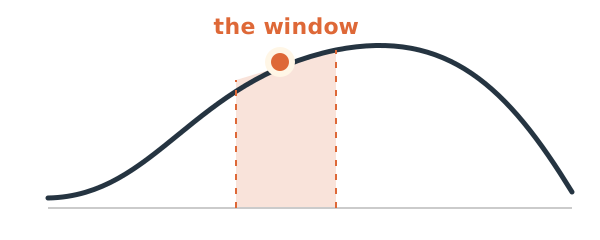
The dot sits in the window — where you want to be. Answer the questions to see where you actually are.
Every way of working follows this shape. Slow at first, then a long climb, then a flattening, then a fall. The next curve has to start before the current one peaks, because a new method always costs performance before it pays, and that cost has to be paid out of something.
Start too early and you throw away gains you have not collected, and the people doing the work read it as churn. The plateau is the trap. It is where change finally looks obvious to everyone, and by then the climb that would have carried it is over. People have been working harder for the same result for months, so they meet the new plan already tired. Past that, on the decline, the change still has to happen and it costs more every week you wait.
The window sits where the climb is slowing and the number still looks good. It feels like the wrong moment, and that feeling is the reason most organisations miss it. Miss it and you are behind the curve. The phrase describes this picture exactly — your decision sitting to the right of the moment that would have carried it.