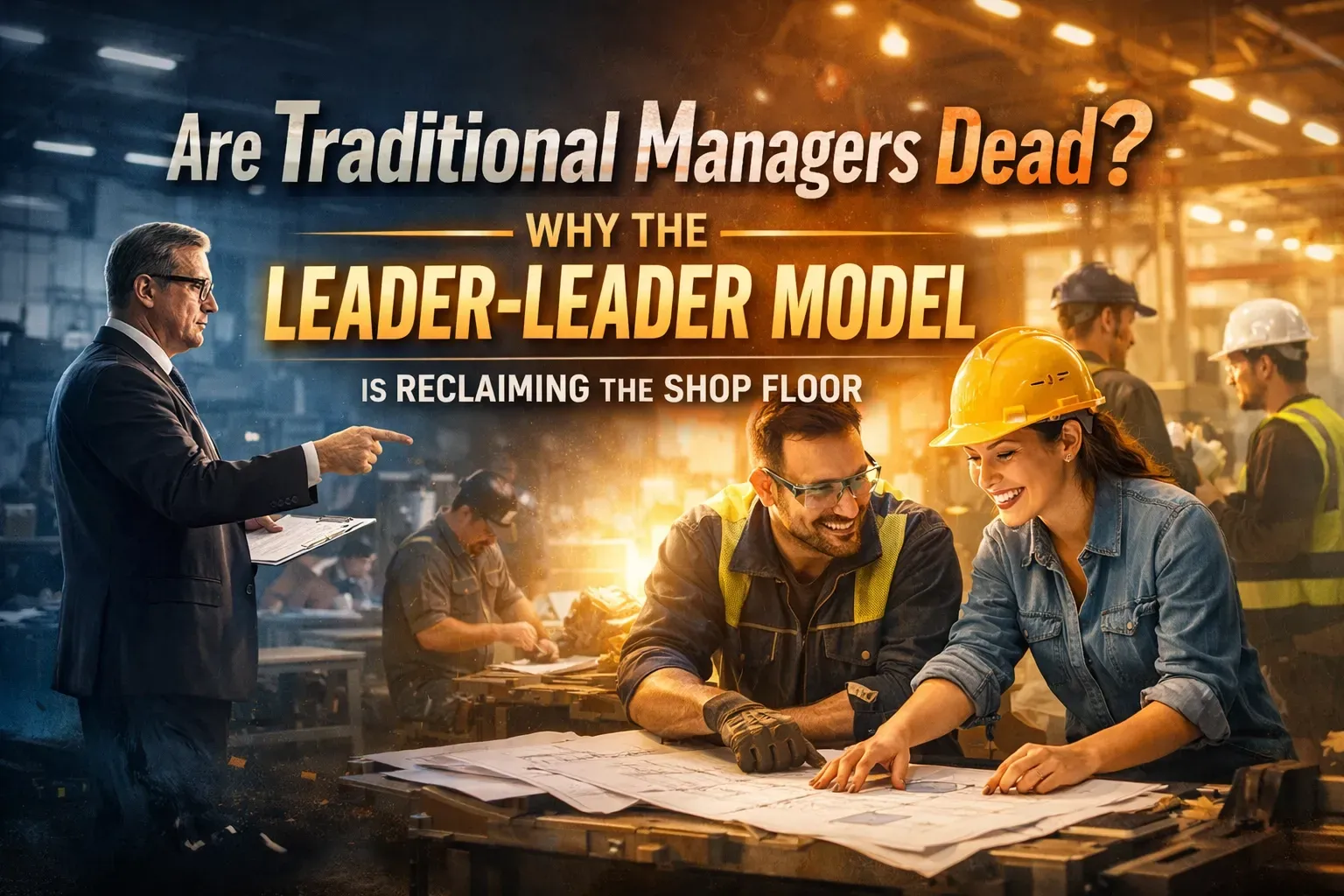
Are Traditional Managers Dead? Why the Leader-Leader Model is Reclaiming the Shop Floor

TL;DR: Traditional management is a relic of the industrial revolution that no longer works on the modern shop floor. When things go sideways at 2 AM, you don't need an Enforcer with a clipboard; you need a team of Leaders. By using the Ownership Index to move from "Auditor" archetypes to "Architects," we stop managing people and start building systems where ownership is a reflex, not a mandate.

The smell of burnt ozone and hydraulic fluid is heavy in the air. It’s 2:14 AM. The main assembly line: the one that pays for everyone’s mortgage: just emitted a sound like a giant clearing its throat with a mouthful of gravel, followed by a dead, ringing silence.


The night shift lead, a guy named Mike who’s been here fifteen years, stares at the HMI screen. It’s flashing an error code that wasn't in the training manual. Mike looks at the office where the "Production Manager" usually sits. The office is dark. The manager is at home, probably dreaming about KPIs and "process optimization."


In a traditional setup, Mike waits. He calls the supervisor. The supervisor calls the manager. The manager calls the tech specialist. Two hours of downtime later, someone gives Mike permission to hit a reset button he already knew he should have hit ninety minutes ago.

This is the "Leader-Follower" model in its natural habitat: a graveyard of initiative, parked right next to your profit margins.


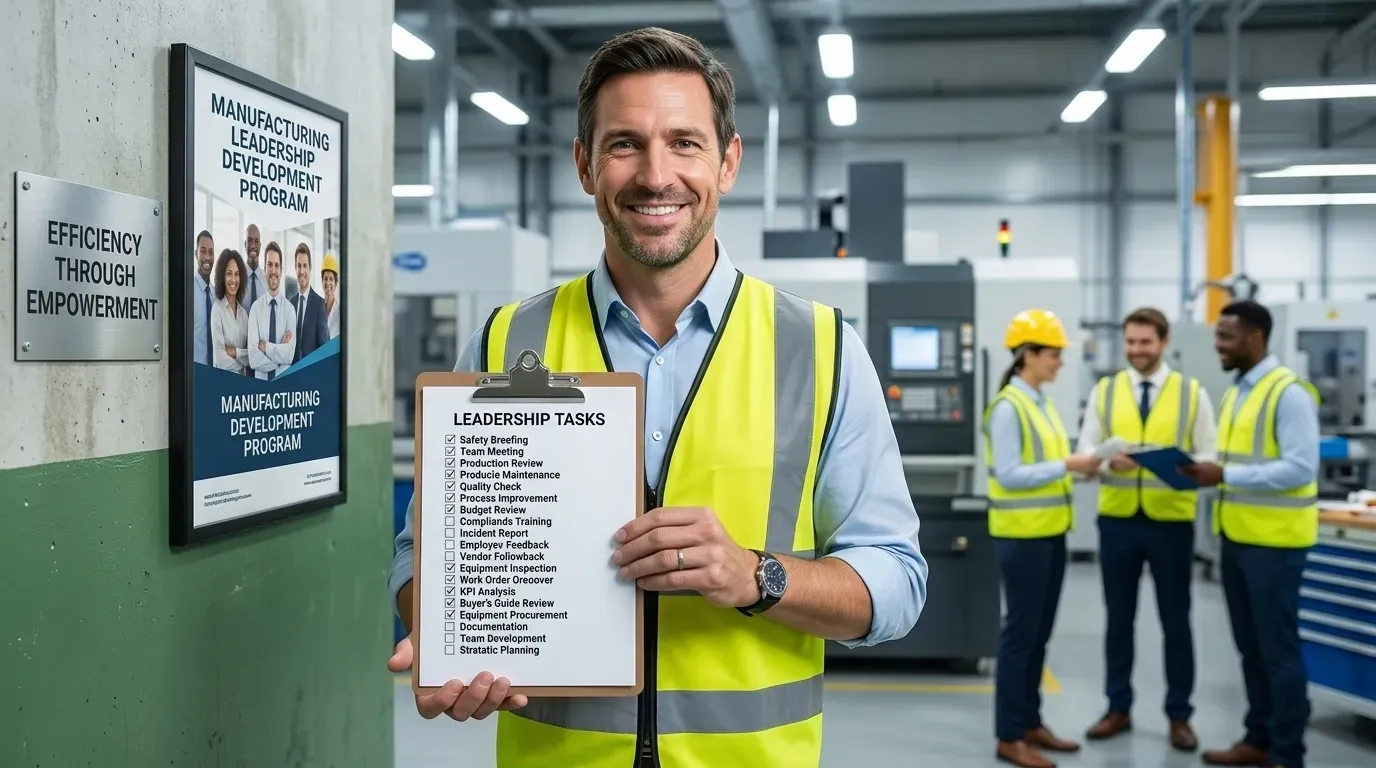
At Isomerics we’re done with it. Traditional management isn't just dying; it’s a liability. If your operation relies on a hierarchy of "bosses" to keep the gears turning, you aren't running a business: you're running a high-stakes babysitting service.

The 2 AM Operational Problem

We call it the 2 AM problem because that’s when the "corporate fluff" evaporates. During the day shift, with the suits walking the floor and the "values" posters looking fresh, everyone plays the game. But when the heat is up, the lights are low, and something breaks, the true culture of your shop floor reveals itself.

Traditional management is built on the "Leader-Follower" mindset. It assumes the guy at the top has the answers and the people at the machines have the hands. This creates a bottleneck of intelligence. It turns your workforce into "Followers" who wait for instructions, even when the ship is taking on water.


The alternative? The Leader-Leader model. This isn’t some hippie-dippie "everyone is a boss" experiment. It’s a tactical shift where the goal is to push decision-making authority down to where the information lives. On the shop floor, the information lives with Mike at 2:14 AM.

The Ownership Index: From Enforcer to Architect

To get from the old world to the new, we use the Ownership Index Framework. It’s the roadmap for moving from "I told you to do it" to "We just do it." We look at three distinct phases: Imposed, Managed, and Embedded.


Most industrial companies are stuck in the Imposed or Managed phases, wondering why their team performance is plateauing.

Phase 1: The Imposed Phase (The Enforcer)

In this phase, leadership is an act of aggression. The archetype here is The Enforcer.

  • The Tell: "Because I said so."
  • The Result: Resistance and malicious compliance.
  • The 2 AM Reality: If the Enforcer isn't watching, the work doesn't happen. Or worse, the operators actively hide mistakes to avoid the "Enforcer’s" wrath.


Phase 2: The Managed Phase (The Auditor and The Coach)

This is where most "modern" companies live. They’ve traded the whip for a clipboard.

  • The Auditor: This archetype manages by the numbers. They don't care how the sausage is made, as long as the spreadsheet is green. The "Tell" here is "The data says we’re off." This leads to Compliance and Reliance. People do the job, but they won't lift a finger to improve the process because that’s the Auditor’s job.
  • The Coach: This is a step up. The Coach asks questions. They try to build Participation. The "Tell" shifts to "How can we do this better?" This is better for talent and succession planning, but it’s still centralized. The team still looks to the Coach for the final whistle.


Phase 3: The Embedded Phase (The Architect)

This is the "Unmanagement" holy grail.

  • The Architect: This leader doesn't manage people; they design systems that allow people to manage themselves.
  • The Tell: "What is your intent?"
  • The Result: Ownership and Reflex.


In the Embedded phase, Mike at 2:14 AM doesn't ask for permission. He states his intent: "The pump seal failed. I’m rerouting flow to Line B and calling the graveyard mechanic to swap the seal now so we’re up for the 6 AM shift." The Architect’s job is already done because the system, the training, and the authority were built into the floor months ago.

Why Command-and-Control Fails When It Gets Messy

Command-and-control is great for a 1920s coal mine where the goal is to keep people from stealing the shovels. It’s catastrophic for a 2026 industrial facility.


When you treat people like "Followers," you give them a psychological "out." If something goes wrong, it’s the manager’s fault. If the quality is crap, the QA guy missed it. If the line stops, I’ll just sit here and check my phone until someone tells me what to do.


This "Follower" mindset is a virus. It kills customer experience because the front line doesn't feel responsible for the end product. It kills innovation because the people who actually see the problems are trained to keep their mouths shut and "stay in their lane."


"Unmanagement" isn't about removing structure. It’s about replacing the structure of authority with a structure of intent.

The Leader-Leader Shift: Stop Giving Instructions

If you want to move toward the "Architect" archetype, you have to stop giving instructions. Every time you give an instruction, you take away a piece of that person’s ownership. You reinforce the "Follower" identity.


Instead, you give Intent.


Instead of saying, "I want you to change the oil on Machine 4 every Friday," the Architect says, "Our goal is 99% uptime on Machine 4. You own the maintenance schedule to make that happen. What do you need from me to ensure we hit that?"


Now, the operator isn't an oil-changer. They are the owner of Machine 4’s uptime. That is a massive psychological shift. It moves them from the "Resistance" stage of the Ownership Index straight toward "Reflex."

Building the Shop Floor of the Future

This shift requires a different kind of training. You can't just send managers to a weekend retreat and expect them to come back as Architects. You have to rebuild the local culture from the grit up.

You have to look at your "Tells."

  • Does your incentive structure reward "following the process" or "achieving the mission"?
  • When a mistake happens, do you look for a throat to choke (The Enforcer) or a flaw in the system design (The Architect)?
  • Are you using tools like artificial intelligence to monitor people, or to give them better data to make their own decisions?


The Leader-Leader model is reclaiming the shop floor because the old way simply can't keep up with the speed of modern production. If your managers are still acting like 19th-century overseers, don't be surprised when your best talent walks across the street to a competitor who treats them like the experts they are.

The Irreverent Truth

Let’s be real: Most managers hate this idea. Why? Because it makes them feel less important. If the team can run itself, what do I do all day?


The answer is: You do the actual work of a leader. You stop fire-fighting and start leading. You stop checking time-clocks and start building the future of the company. You move from being a "Manager" (a title that means nothing) to an "Architect" or "Mentor" (a role that changes everything).


Traditional management is dead. The only question is whether you’re going to be the one performing the autopsy or the one moving into the future.


If you’re tired of the 2 AM phone calls and the "it’s not my job" excuses, it’s time to look at your Ownership Index. We’re Isomerics, and we help companies stop managing and start leading.


What’s the first instruction you’re going to stop giving today?