Why Does Industrial Training Keep Failing? (Even When Attendance is High)
Why Does Industrial Training Keep Failing? (Even When Attendance is High)
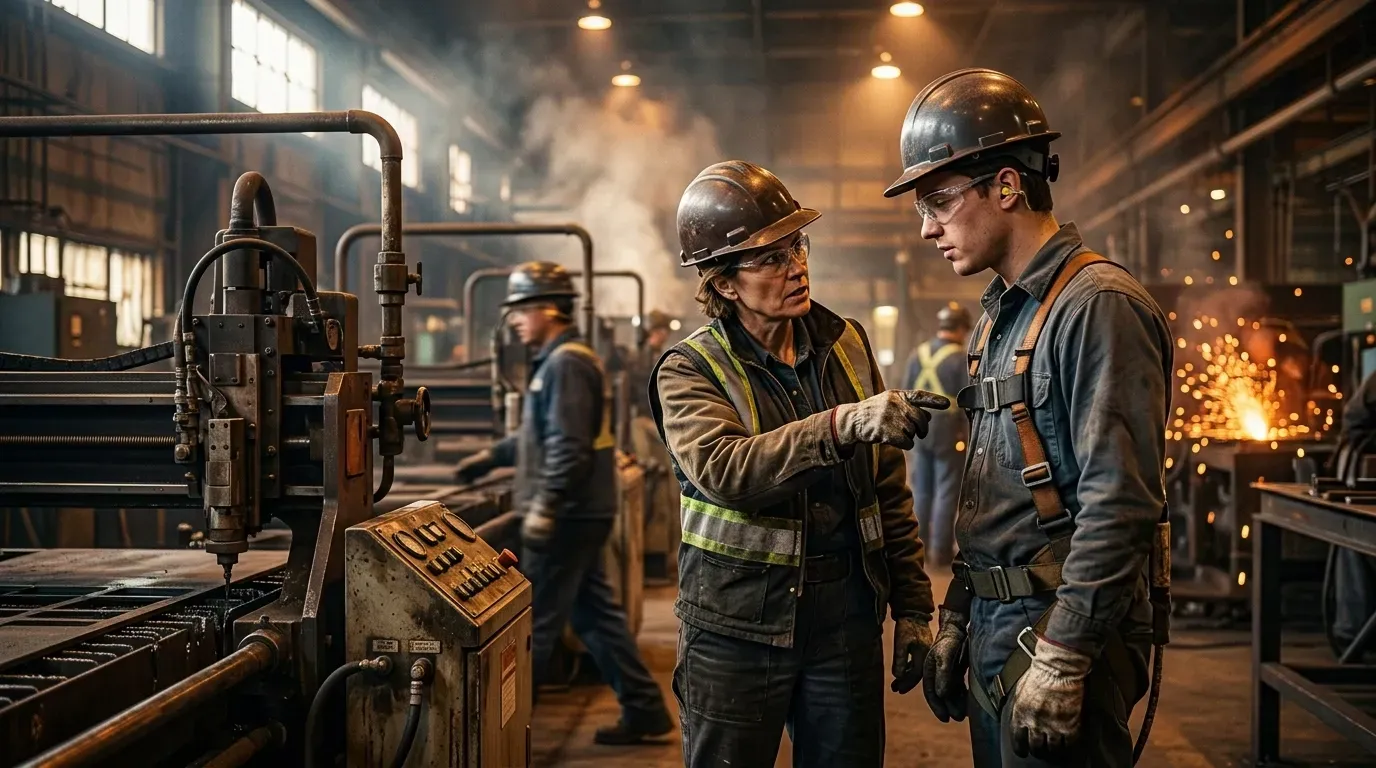
The air in the plant has a weight to it today. It’s thick with the scent of scorched ozone and the metallic tang of 4140 steel being milled three bays over. Beneath your boots, the floor vibrates with the steady, rhythmic thrum of a production line that never sleeps. It’s the sound of money being made: or at least, that’s what the dashboard says.
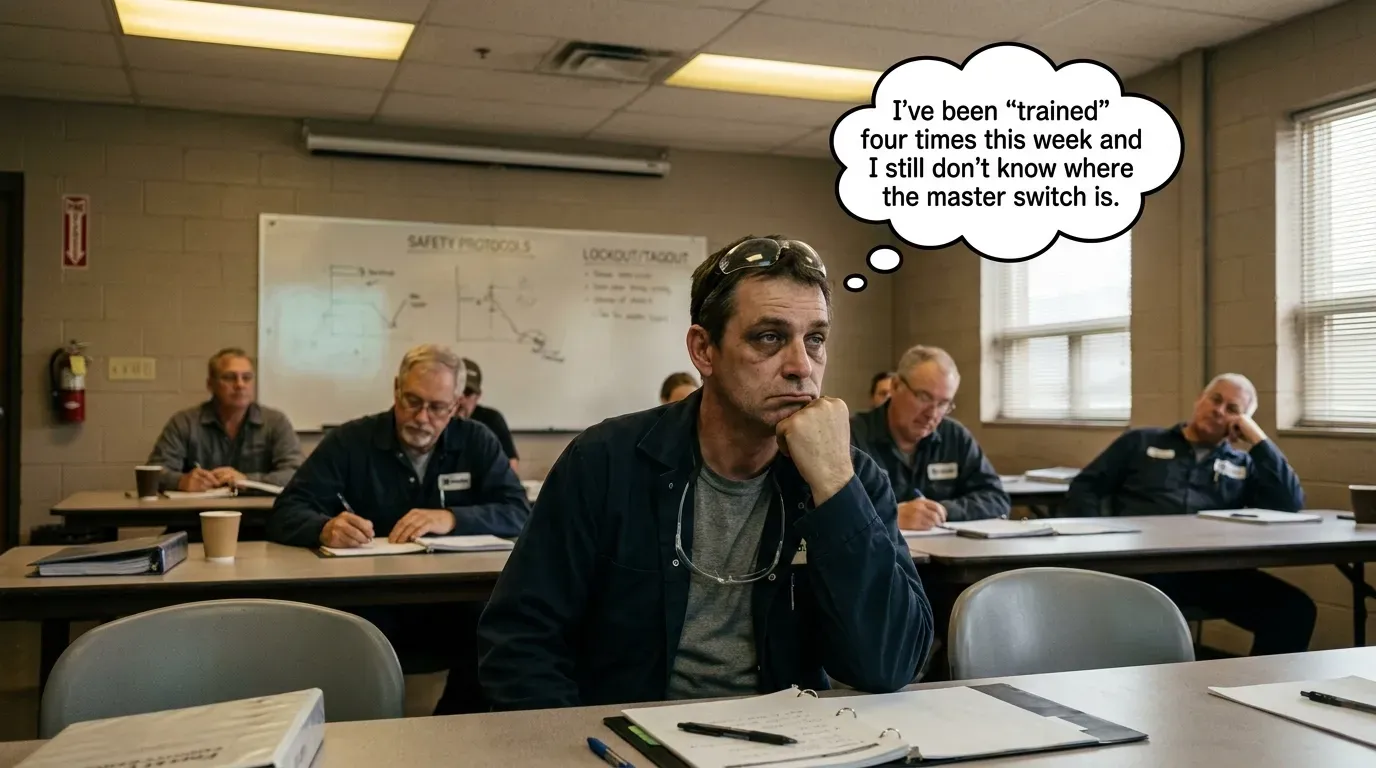
But as you walk past the breakroom, you see them: twenty operators sitting in plastic chairs, staring at a PowerPoint deck about "Operational Excellence." The attendance sheet is full. Every box is checked. On paper, your workforce is being transformed.
In reality? They are just sitting there, waiting for the clock to hit the hour so they can go back to the floor and do exactly what they’ve always done.
TL;DR
- The Problem: Attendance is a compliance metric, not a behavior metric. High attendance often masks a total failure of skill transfer.
- The Cause: Most training ignores the "Environment": the gravity of the shop floor that pulls people back into old habits the moment they leave the classroom.
- The Audience: Plant Managers, Operations Directors, and HSE Leads who are tired of paying for "check-the-box" solutions.
- Read Time: 8 minutes.
- The Fix: Stop training for knowledge and start architecting for behavior.
The Counterfeit Currency of Compliance
In industrial operations, we love metrics. We track uptime, yield, and incident rates with religious fervor. But when it comes to "people development," we often trade in counterfeit currency.
Attendance is that currency.
You see a 98% completion rate on your new safety module and you sleep better at night. You shouldn't. Attendance tells you nothing about capability. It tells you that twenty people were physically present in a room while someone spoke. It doesn’t tell you if they can: or will: apply that knowledge when a pump starts leaking at 3:00 AM on a Sunday.
At Isomerics, we call this the
Compliance Trap. It’s the belief that because someone knows what to do, they will do it. But in a 24/7 manufacturing environment, knowing is barely half the battle. If your training doesn't account for the friction of the real world, you aren’t building capability; you’re just
lecturing.
The Story of Dave and the Invisible Gravity
Meet Dave. Dave has been a lead operator for eighteen years. He knows the sounds of the plant better than he knows the sound of his own wife’s voice. Dave just sat through a four-hour workshop on "Behavior-Based Safety." He signed the roster. He even got a certificate.
He walks back to his station. He sees a junior operator skipping a lockout-tagout step to save five minutes on a changeover. Dave knows the new rule. He literally just spent four hours hearing about it. But the production quota is looming, his supervisor is breathing down his neck about "the numbers," and the "old way" is what has kept this plant running for two decades.
What does Dave do? He looks the other way.
Why? Because the Environment is stronger than the Training.
Training is a localized event; the environment is a constant force. If you train your people in a vacuum but send them back into a system that rewards the old behavior, the system wins every single time. This is why
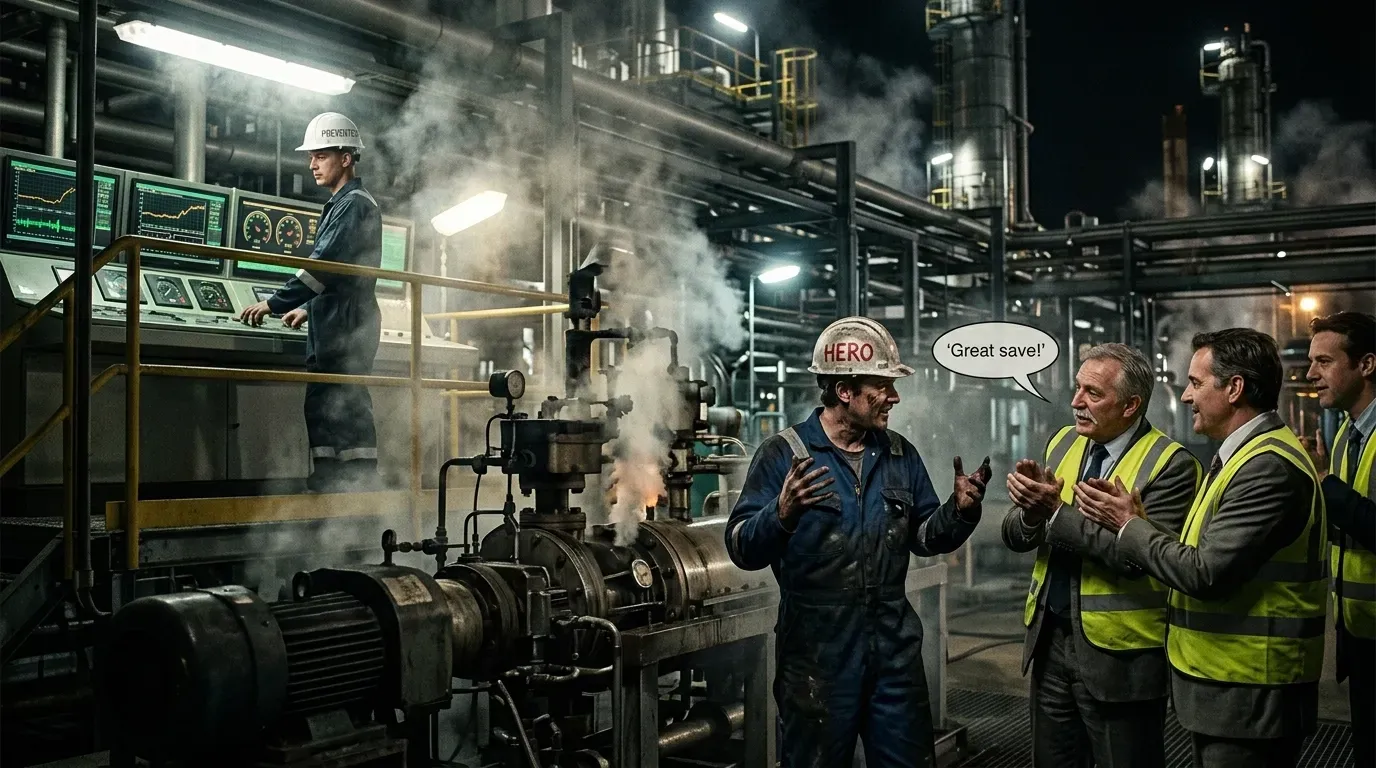
frontline leadership training fails. You’re asking individuals to be heroes against a system that is designed to keep them doing exactly what they’ve always done.
The Graveyard of Ghost Fixes
We’ve all seen them: the sun-bleached safety posters from 2012, the binders of SOPs that haven't been opened since the last ISO audit, and the "intensity coaching" sessions that last exactly as long as the consultant is on-site.
These are
Ghost Fixes. They provide the illusion of progress without the substance of change.
For example, one I see a lot is that problems are incorrectly diagnosed as efficiency problems. So a firm that "solves for efficiency," gets hired on. They give you a better map. But if your people are already
swimming in molasses, a better map doesn't help them move faster. It just shows them how stuck they really are.
Traditional corporate fixes: the HR workshops, the motivational speakers, the generic leadership retreats: are band-aids on a systemic fracture. They treat the symptoms of a failure in diagnosis. They assume the problem is a lack of information. It rarely is. The problem is a lack of intentional behavior design.

Introducing The Ownership Index: Enforcers vs. Architects
To understand why your training is failing, you need to look at your supervisors. We categorize frontline leaders into two archetypes: The Enforcers and The Architects.
- The Enforcers: They see training as a set of rules to be policed. They use accountability like a hammer. When behavior doesn't change, they hit harder. This creates an imposed culture of resistance and requirement, where people perform for the audit and revert the second the supervisor turns their back.
- The Architects: They understand that behavior is a result of the environment. They don't just teach the new way; they make the new way easier than the old way. They look for the "steam leaks" in the process that make compliance difficult and they fix the pipe, not the person.
Where does your leadership team sit on The Ownership Index? If they are mostly Enforcers, your change management initiatives will always have a shelf life of about thirty days. After that, the "invisible gravity" of the old culture will pull everyone back to baseline.
Trading Truth for Sleep
As a Plant Manager, you face a choice every day: Do you want the truth, or do you want to sleep?
If you want to sleep, keep looking at those attendance records. Keep telling yourself that because everyone attended the "Active Listening" seminar, your shift handovers are going to improve.
But if you want the truth, you have to embrace a sense of chronic unease. You have to realize that the absence of a disaster is not proof that your training is working. It might just be luck. And in industrial operations, luck is a terrible strategy.
The gap between "knowing" and "doing" is where your risk lives. It’s where the safety incidents happen. It’s where the quality defects hide. Handling a problem is not the same as solving it. If you have to tell your team to "be careful" every morning, your system has already failed. You are relying on individual willpower to compensate for a broken process.

Moving Beyond the Classroom: Making Change Stick
So, how do you make training stick in a 24/7 environment? You stop treating training as an event and start treating it as a capability-building process.
Solve for Behavior, Not Efficiency:
Don't just ask "How can we make this faster?" Ask "What behavior are we trying to create, and what is stopping it right now?"
- Context is King: If your trainer hasn't spent time in a hard hat, they shouldn't be in your training room. Your operators can smell "corporate" from a mile away, and they will tune it out immediately.
- The 24/7 Reality: Your training needs to work for the night shift just as well as the day shift. If the support systems disappear at 5:00 PM, your training will disappear with them.
- Connect to Outcomes:
Every step of your transformation must be intentional and connected to real operational results. If you can't draw a straight line from the training room to the bottom line, don't do it.
Stop training to train and start training to change
You can keep spending your budget on binders and badges. You can keep hitting that 100% attendance goal. But if your supervisors are still protecting "the numbers" instead of surfacing problems, you are just training to train.
The output looks great. It’s shiny. It’s "compliant." But the training is still broken, and your floor still lacks capability.
It’s time to stop looking at the attendance sheets and start looking at the behavior on the shop floor. Are your leaders Enforcers or Architects? Is your environment helping or hindering the change you want to see?
At Isomerics, we don't just solve for efficiency. We solve for behavior. We help you turn strategy into action that actually lasts: even when the lights are low and the pressure is high.
Are you ready to stop "handling" the problem and start fixing the pipe?
Contact Isomerics Today to learn how we can help your industrial operation build change that sticks.